Monday, June 23, 2014

Crack the Skye: A Metal Masterpiece


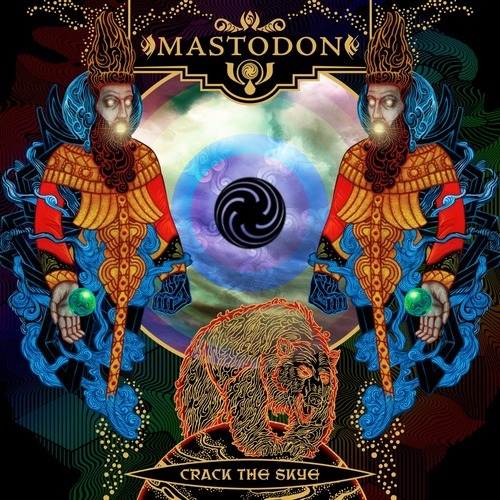
Let’s get this straight: Crack the Skye is confusing. I needed some help interpreting this one. First of all, let’s look at the basic concept behind the music. Mastodon has 4 albums that have used Elemental themes: Remission was fire, Leviathan water, Blood Mountain earth, and this masterpiece, Crack the Skye, is Ether, an ancient element that was believed to be the medium through which light travels, which makes sense if you look at the story of the album. The story begins with a paraplegic. He cannot move his arms or legs and can only travel using astral travel, travelling along the astral plane. inOblivion, the boy paraplegic, who is astral travelling using a golden umbilical cord attached to his solar plexus, gets said cord burnt off as he “flew beyond the sun before it was time, breaking all the fingers and the nails from my hand”. He believes himself to be dead, but he is told by spirits in the spirit realm that he is not dead. In the song Divinations, he is summoned into the body of Rasputin, an ancient Russian historical figure who was believed to have special “super” powers. As Rasputin tries to assassinate the Czar in The Czar, he himself is murdered, and the two souls (Rasputin and the boy) fly out into a Crack in the Sky (Crack the Skye) By this time, the boy’s parents believe him to be dead, so Rasputin tries to help the boy find his way back before they lose all hope and before it is too late to do so. Then, the two encounter the Devil, who tries to steal their souls and bring them to hell in The Last Baron. The story is never resolved, and it is the reader’s interpretation of what happens next. 
Whew. What a story.
Amid all the spirtual meaning of the album is the simple concept of Ether. This Ether allows the boy to astral travel. Among other things, there is a special meaning to the extra ‘e’ in Crack the SkyE. Skye was the sister of drummer Brann Dailor, and he has dedicated the album to her, a fine thing to do, especially for such a masterfully done album.
image

The Black Parade

Listen On Spreaker:
(Part One): http://www.spreaker.com/user/djsteele/the-black-parade-part-one
(Part Two): http://www.spreaker.com/user/djsteele/the-black-parade-part-two
The Black Parade is one of my absolute favorite albums, because it combines the elements of alternative rock and pompous fanfare that, to me, classifies it as an "Alternative Rock Opera" (yes, I call lots of things operas: get used to it). The story centers around a character known simply as "The Patient", and I do not believe this patient is ever actually mentioned in any of the songs. The story is mainly a reflection of his or her life as they are dying and beyond.
The album begins with a heartbeat meter, *beeeeeep* *beeeeeep* *beeeeeep* signalling to us that the patient is still alive, although not for long. The track is entitled The End, a sort of poetic way to start off the album. It is essentually the prelude to the album, but it does hearken back to the beginning of the patient's life. "When I grow up, I want to be nothing at all..." This patient had few expectations or aspirations, but that doesn't mean he didn't have heartbreak or rejection along the way. The End feeds directly into the appropriately titled Dead! as the patient dies. This is not a concrete death, in my opinion, rather, I believe this songs sparks the beginning of the patient's death which encompasses the rest of the album. Perhaps it is the knowledge that the character is going to die. In any case, the line "no one ever had much nice to say" leads me to believe not necessarily that The Patient was unloved, but more unknown. The Patient was inconspicuous and unknown to many around him and probably lived a relatively quiet life. After Dead! we step into This Is How I Disappear, referring most likely to how The Patient's death will have him disappear, a phrase not common with the theme of death, but appropriate here given the obscurity of The Patient, who seemingly has very few close family members (except for Mama, but we will get into that later). The Sharpest Lives, to me, is a plea of The Patient, in a way. "The Sharpest Lives are the deadliest to lead..." But he is pleading that others not follow into his obscure footsteps, rather, he wants them, although it may be deadly, to lead "Sharper Lives". The next track  is one of my all-time favorite songs, Welcome to the Black Parade. Gerard Way, the lead singer, has told us that it is based of the belief that death comes to you in the form of your fondest memory. Watch the music video, and picture that. It really is a great representation. The Patient's best memory in this case is a parade with a marching band that his father took him to see. In my interpretation of the events, the father is now dead, and this is why it is such a fond memory for The Patient, who I see as being around 25-28 years of age. Welcome to the Black Parade is filled with the pompous rock that rock operas are truly made of, which represents the grandeur and bizarre nature of the scene. Death is coming for our hero, The Patient. I Don't Love You is next, and represents, in my opinion, the loss of love that The Patient's first love interest encountered. "I don't love you like I loved you yesterday" she exclaims before leaving him forever. This rejection is one of the important events in his life that flashes before his eyes as he lies in the hospital bed, dying. House Of Wolves is a plea for help. The Patient believe he is going to hell, which may or not be true, but judging by the lyrics, he is very afraid and believes himself to be a sinner. Perhaps this occurs as he is receiving some sort of Last Rites from a priest. Cancer is a very revealing track in that we finally know why The Patient is dying: some form of cancer. The Patient reflects on how he first learned about the cancer, how he felt about his few friends and relatives visiting him "Turn away, because I'm awful just to see...". This moment was the turning point, the start of a downward health spiral in his life. Mama comes immediately afterwards, and describes his mother's anguish as the young man went to fight a war. He talks about the war, about how he should have been a better son for his mother, and how guilty he feels. The war continues, but after it is complete, he has PTSD (Post Traumatic Stress Disorder) from his experiences, which are described in Sleep. Where a tape recorder mentions "terrors", "tremors", and "feels as if somebody was gripping my throat". He sees "images of loved ones dying". Teenagers describes his feeling of fear towards others as a teenager. They scared "the living shit out of me" and the anguish he feels as a teenager is also described. He mentions sleeping with a gun for fear of his life, and gives hints of self harm. His memories are coming faster now, almost as if he is watching it on a screen, described in Disenchanted. He says "I hate the ending myself, but it started with an alright scene". The beginning of his life was fine, but the end was horrible, with the cancer, the war, and the pain of loss. The memories come faster, as this song seems to be chock full of them, as it mentions "the roar of the crowd" and "as we ran from the cops". Finally, we get to his very last thoughts in Famous Last Words. "I am not afraid to keep on living, I am not afraid to walk this world alone...Nothing you can say can stop me going home." He is finally comfortable with where he has ended up, what has become of him. He is no longer afraid. I believe he has found some sort of spiritual peace and rebirth during his last few minutes, as he describes death as life. He is not afraid to keep on living, meaning he believes he will live on, but he is not afraid. He is going home, and nothing can stop him.

MY RATINGS:
Music: 8/10
Story: 6/10
Concepts: 9/10
Overall: 7.7/10

American Idiot: A Punk Rock Opera

Listen on Spreaker:
(Part One): http://www.spreaker.com/user/djsteele/american-idiot
(Part Two): http://www.spreaker.com/user/djsteele/american-idiot-part-two

If you were at all alive during 2004, you have probably heard of Green Day's smash hit album, American Idiot. Everything about this album, from the artwork to the story to the music, is top notch. it truly is a punk rock masterpiece, but it transcends punk music and becomes something more. Since its release it has become a centerpiece of alternative radio stations and even has been turned into a broadway musical. Here's the story. The album begins with American Idiot, a charged up, heavy anti-American anthem that screams punk. Then the story begins with the next track, broken up into several sections. Jesus of Suburbia/City of the Damned/I Don't Care/ Dearly Beloved/Tales of Another a Broken Home. Rolls right of the toungue, doesn't it? In all seriousness, this is one of my favorite songs on the album, and sets the stage for the entire story. We are introduced to our main character, Jesus, who is the self proclaimed "son of rage and love", who lives in the suburbs. Simply put, he cannot stand it. He needs something more, some excitement, something new. He visits the shopping mall and reads the graffiti on the wall, and it says that his town, The Center of the Earth, is the end of the world, meaning you can live and die in that suburb without ever really living. He says he could really care less, but he knows better. He needs out. He also mentions that "they say home is where the heart is but what a shame cause everyone's heart doesn't beat the same... It's beating out of time..." This is not where his heart is, this isn't for everyone. In the further sections, we will learn why. In I Dont Care, Jesus of Suburbia shows his apathy towards the suburbs and his home and where he lives. Dearly Beloved at first glance at the title would appear like a love song, but it is in fact, in my opinion, a sarcastic blow towards his parents. "I can't remember a word that you were saying" means he never listened to them, never took them seriously, and in the final section we learn why. Tales of Another Broken Home gives us the impression that he comes from one (a broken home). He finally iTunes away from the suburbs towards the excitement of the city, and he won't apologize for he feels no shame. Another thing: he brings followers, what I will call disciples, other individuals from similar situations. Next up is the anti-war Holiday, which is classic driving punk rock. Towards the story, it gives us Jesus' anti-war ideals. I can picture our character screaming into the rain, on his way to the city, all these dead ideas until hoarse. His followers slowly thin out until it is just Jesus remaining, walking the Boulevard of Broken Dreams. In this song, the main character now walks "a lonely road", the only one he has ever known, hardening back to how he always felt alone in his broken home, possibly abused by his parents and ignored by his peers. Then he sees the city: enter We Are The Waiting. I picture our hero standing, stunned, as the rain begins to slow as the city seems to rise up out of the mist and the fog. It gives a grand sort of feel to the city, he is awestruck: it is something he has never experienced before. When entering the city, he meets a new character: St. Jimmy. But here's the thing: St.Jimmy is merely Jesus' alter ego, not a new person, in my opinion. St. Jimmy is, for lack of a better word, a total punk badass. He also does drugs, nicknamed Novocaine by Jesus. Give Me Novocaine is a reference to Jimmy getting Jesus hooked on drugs, saying it is better than air. The next song opens up instantly, it's as if the girl, Whatsername, walks by and makes Jesus stop what he is doing, he is awestruck, how rebellious this girl is! She's a Rebel also has Jesus wondering aloud, "is she trouble like I'm trouble?". His alter ego, St. Jimmy, seems to gnaw at him, telling him not to fall for her, but it is too late. In Extraordinary Girl, we get a look into her mind and her life. "She's all alone again, wiping the tears from her eyes..." She has been hurt one too many times to feel love, she is hardened, cold. In Letterbomb she exposes St. Jimmy to be nothing more than "a figment of your fathers rage and your mothers love" and openly mocks him, which destroys him, in the radio show, I left out Wake Me Up When September Ends, as it does not, in my opinion, relate to the story, rather, it is a node to Billy Joe's late father. The second to last track is the longest on the album, clocking in at just under ten minutes. Homecoming/The Death Of St. Jimmy/East 12th Street/Nobody Likes You/Rock and Roll Girlfriend/Were Coming Home Again is the most important and in my opinion the best song on the album. It features the suicide of Jesus' alter ego after his exposure by Whatsername. He "blew his brains out into the bay" and it is described by Jesus as his "own private suicide". He is sitting at his new job filling out papers on East 12th Street, when he realizes he has to escape again. He cannot take the city, he realizes it is just like the suburbs. I draw a similarity to Born To Run here, as this Springsteen album is all about getting out, escaping, it is the motif, the theme of the album. I also see a biblical theme here. The death of St. Jimmy represents the death to self, but a spiritual rebirth for Jesus of Suburbia, in a sense, St. Jimmy dies, and takes all of Jesus of Suburbia's sins with him, cleansing him. Nobody Likes You harkens back to what Whatsername has said, echoing within Jesus' mind. Finally, in We're Coming Home Again, it is rather self explanatory, except that it references WE. Who is we? The answer, in my opinion, is all the experiences that Jesus has had in the city, coming home with him, making him a more complete person. It is as if he is dragging the dead body of St. Jimmy along with him as he treks back home. The album closes with Whatsername which has Jesus wondering if he will ever see her again, maybe he already did on the street the other day....

MY RATINGS-
Music: 9/10
Story: 9/10
Themes: 9/10
Overall: 9/10
Sunday, June 22, 2014

Good Kid, m.A.A.d City, In Narrative Form

First of all, thank you to Ryan Bassil for his interpretation of this album, you can find his interpretation at http://noisey.vice.com/blog/the-narrative-guide-to-kendrick-lamars-good-kid-maad-city. He inspired me to post the album in its narrative order rather than the given album order. That order is also found at that link.

The album is what I would like to call a "Rap Opera". The main character of this opera is K.Dot, a young man who lives in the thug-life city of Compton. The opening "scene" of this opera is the opening credits, so to speak, and Compton plays during these credits, minus the ending narrative section in which K.Dot grabs his mother's keys to the car and says he will be back in 15 minutes, as this happens later. The first real part of the story is the skit at the end of Bitch Don't Kill My Vibe in which one of K.Dot's "homies" pulls up to him and tells him he has some cigars and a beat CD, and K.Dot hops in the car, wanting to be one of the in-crowd. This begins Backstreet Freestyle, in which K.Dot is presumably freestyling over the beat CD in the car that he is picked up in. The Art of Peer Pressure begins, in which K.Dot describes how he does things he does not usually do when he is with his "homies", like drugs, alcohol, etc. in order to fit in. They had been camping a house for a couple of months and finally go in and rob it. They are pursued by the police, who make a wrong turn and K.Dot and company escape. The character of Sherane is introduced as the love interest of K.Dot, as his homies mention that K.Dot is probably going to "fuck on Sherane tonight". When K.Dot can no longer wait, he grabs his mother's car keys and says he will be back in 15 minutes (this is found at the end of Compton). Sherane AKA Master Splinter's Daughter then begins, and he describes how the two met and their relationship. By the end of the song, he has reached her house, but two figures in black hoodies confront him when he is about 250 feet away from Sherane's house, as his phone rings. It is his mother, telling him that he said he would be back in 15 minutes, that she needs to pick up the food stamps for food, and that K.Dot's father keeps asking for Domino's Pizza (which I find hilarious). Poetic Justice then plays, and by the end, we hear the two hooded kids giving K.Dot a hard time, and presumably he is beaten. The next day he reflects on what happened in the song Good Kid, saying that he got "eaten alive" last night and that he is an easy target. This is one of his revelations that perhaps the thug life of Compton is not for him. m.A.A.D City is next, and he describes an incident at a burger stand in his past in which he witnessed his friend killed by a rival gang. Then comes the skit after Money Trees, in which K.Dot's dad has forgotten (almost) about the Domino's pizza and his mother is aggravated and says she will just reschedule the appointment and she just wants her car back. When, after Swimming Pools, which is another reference to pressure to drink alcohol with his friends, his friends decide to enact revenge on the ambushers of K.Dot. As they make their plan and enact it, one of the gang, Dave, gets shot. This is the final piece of the pie for K.Dot, now fully transformed into Kendrick Lamar. Sing About Me/I'm Dying of Thirst is a final plea of Dave to sing about him when he is gone, but he dies before he can finish his sentence. The song switches to the viewpoint of a girl, Keisha's sister (Keisha is referenced on Lamar's first album, Special.80) who describes that she doesn't want anything to do with Kendrick anymore. Kendrick apologizes, and his transformation is complete after his neighbor sees him and his friends with guns, and asks them to pray and receive Jesus Christ as their Lord and Savior. This is the final step toward Kendrick's enlightenment, and on Real he finally feels complete and comfortable with himself and who he has become. The "closing credits" as described by Ryan Bassil is Compton, which you can picture playing as the screen fades to black. The album is over, and Kendrick Lamar is born.

My Ratings -
Story: 7.5/10
Music: 9/10
Themes: 8/10
OVERALL: 8.2/10

LISTEN at http://www.spreaker.com/user/djsteele/m-a-a-d-city (Part One)
and http://www.spreaker.com/user/djsteele/m-a-a-d-city-part-two (Part Two)

Welcome

Welcome to The Deep End, a blog and mirroring radio show dedicated to the meanings behind concept albums, songs, and album art. I bring you but one interpretation of these albums, but yours are always welcome in the comment section and through email. I look forward to diving into the meanings behind some of music's most meaningful albums.
To listen to the radio station, please visit the Spreaker profile at http://www.spreaker.com/show/the-deep-end